Fourth consortium meeting and review meeting

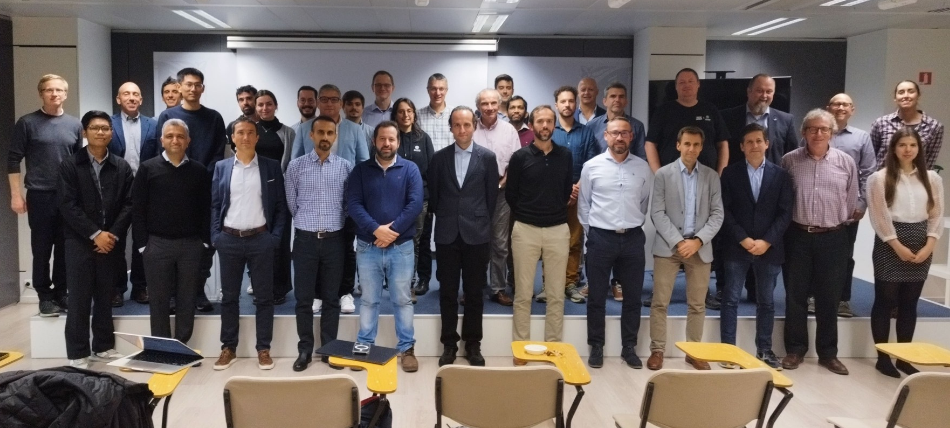
On 3–4 June 2026, the STOR-HY consortium convened in Brussels for its fourth consortium meeting and first review meeting, bringing together project partners, the Project Officer from the Climate, Infrastructure and Environment Executive Agency (CINEA), an external reviewer, and one of the Chairs of the International Advisory Board. This two-day event offered the chance to evaluate progress made during the initial reporting period, discuss ongoing activities and define priorities for the next phase of the project.

Reviewing progress across the project

The meeting opened with a presentation by project coordinator Alexandre Presas Batlló (Universitat Politècnica de Catalunya), who provided an overview of the project’s achievements to date. At month 18, STOR-HY remains on track to deliver innovative pumped storage hydropower solutions, having submitted 16 deliverables, published several scientific publications, and developed a growing portfolio of communication and stakeholder engagement activities.
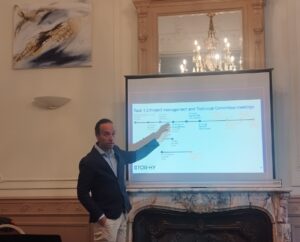
Partners then presented progress across all work packages.

WP2 reported advances in defining the technical, economic, environmental, regulatory, and social requirements for future pumped storage plants through the development of the STOR-HY matrix, which was presented in a workshop last July. Significant progress has also been made in defining business use cases for all demonstrators and developing methodologies to assess social acceptance and environmental performance.

WP3 showcased developments in advanced monitoring technologies and the Cyber-physical platform for Advanced Decision Support (CADS). Monitoring systems are already operational at several demonstrators, while work continues on virtual sensors, predictive maintenance strategies, CFD and FEM models, and the cloud-based CADS platform that will support operational decision-making.

WP4 presented progress on innovative control and operational management strategies for pumped storage plants. These activities included developing advanced control algorithms, optimisation tools for energy management and ancillary services, battery sizing methodologies, and concepts for hybridising hydropower with batteries and photovoltaic systems.

WP5 highlighted advances in technologies for harsh operating environments and saltwater applications. Partners reported progress on their work with anti-corrosion coatings, biofouling mitigation solutions, sediment monitoring technologies, and studies exploring the future potential of saltwater pumped storage hydropower in Europe.

Demonstrating innovation in real operating environments

A key focus of the meeting was WP6 and the project’s demonstrators, which are essential for validating STOR-HY technologies under real operating conditions. Updates on the demonstrators at Vouglans–Saut Mortier–Coiselet, Le Cheylas, La Rance, Alqueva, and Vilarinho das Furnas were presented. The activities presented ranged from advanced monitoring campaigns and wear-and-tear assessments to biofouling mitigation, hybridisation studies, and innovative operational strategies for increasing flexibility.

Sustainability, exploitation, stakeholder engagement, communication and dissemination

Progress was also reported on the project’s sustainability activities. WP7 presented initial results of the life-cycle assessment, biodiversity analysis, circular economy evaluation, life-cycle costing, and social acceptance studies. These activities will contribute to a comprehensive sustainability framework capable of evaluating the environmental, economic, and social impact of innovative hydropower solutions.
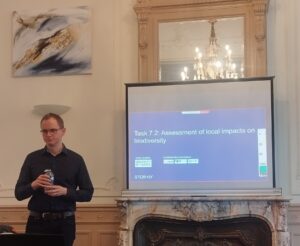
WP8 presented ongoing work to maximise the long-term impact of STOR-HY through exploitation planning, market analysis, and the identification of Key Exploitable Results (KERs). The first version of the project’s Exploitation Master Plan is currently being prepared to support the future uptake of STOR-HY technologies.

WP9 presented the progress achieved in stakeholder engagement, communication, dissemination, and training activities. During the first reporting period, the project launched its website and social media channels, published scientific papers and technical articles, organised public events and workshops, and strengthened collaboration with other European hydropower initiatives.

A successful first review

The second day of the meeting was dedicated to the review of the first reporting period. The consortium presented its achievements to the Project Officer and the external reviewer, who assessed the project’s progress against its objectives and planned activities.

The review was successful, and the consortium received positive feedback on the quality of the work performed. The reviewers recognised the project’s achievements and provided valuable recommendations for the next stages of implementation.

Having established a solid foundation established during its first 18 months, STOR-HY now enters the next phase of the project with a clear roadmap for advancing innovative technologies and operational solutions that will contribute to the future of pumped storage hydropower in Europe.

We would like to thank all the partners for their contributions, the International Advisory Board for its continued support, and the Project Officer and reviewer for their constructive feedback and guidance throughout the review process.

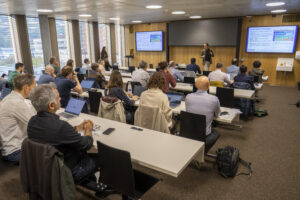
STOR-HY marks one year of innovation and collaboration at ots third consortium meeting in Sion

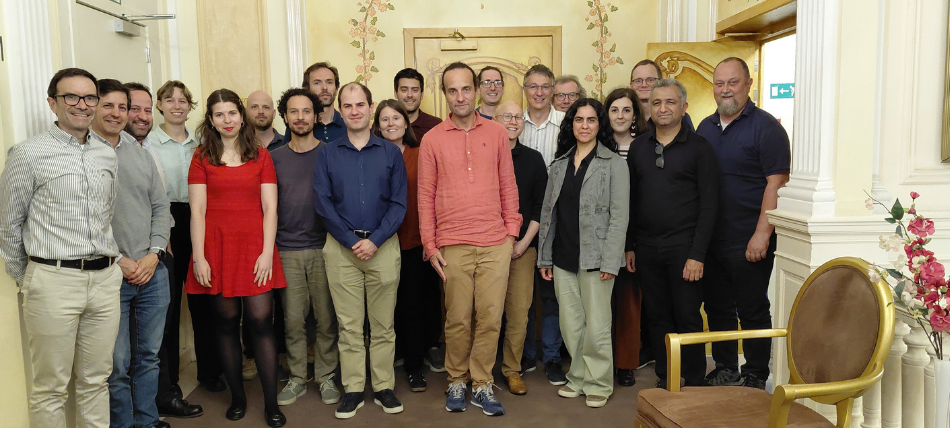
From 1 to 3 October, the STOR-HY partners gathered in Sion, Switzerland, for the project’s third consortium meeting, which was hosted by the HES-SO Valais-Wallis School of Engineering. The meeting coincided with the project’s first anniversary, marking a year of progress and close collaboration.

Work package updates

Each Work Package (WP) leader presented an update on their work since the previous consortium meeting in May. The UPC, leader of WP1, provided an overview of the project’s status, including the visits to the EDF demonstrators and the testing plans for the EDP demonstrators (Alqueva and Vilarinho). The following work was performed on the EDF demonstrators:

  • Modal analysis at Vouglans/Saut-Mortier by the UPC
  • Installation of the turbidity sensor at Le Cheylas by Andritz
  • Installation of the monitoring system at Le Cheylas by the UPC
  • Installation of turbidity and sediment sensors at La Rance by Andritz and EDF

The project coordinator, Alexandre Presas, also introduced the Gender Assessment Team, which monitors the implementation of the Gender Action Plan and held its first meeting in September. A gender balance survey was sent to all partners to collect data on the gender identity of project participants, which will be used to establish KPIs.

For WP2, INESCTEC, UT, and NORCE presented the techno-economic-regulatory, environmental, and societal dimensions that had been discussed during the “Identification of New Hydropower Requirements in a Context of Climate Change and RES-powered System” workshop in July.

Updates for WP3 included an overview of the Cyber-physical clone for Advance Decision Support (CADS), the installation of the aforementioned sensors and monitoring systems in the EDF demonstrators. Andritz explained that there were some issues with the sediment measurements, because the values were very low. PSP equipment at the Vouglans-Saut-Mortier-Coiselet (VSMC), Le Cheylas, and Alqueva demonstrators has been modelled.

In the WP4 presentation, partners presented their progress on back-to-back starting to achieve grid synchronisation and energy management of hydropower hybridised with battery energy storage systems and photovoltaics in Alqueva. The WP5 partners explained how they are enhancing the durability of PSP equipment in harsh operating conditions and saltwater environments, including biofouling, technical coatings, and sediment measurement.

As part of WP6, FAEN, HUNOSA, and SADIM provided updates on the location, size, and cost analysis of the Pozu Figaredo demonstrator, while EDP NEW presented the Demo Management Board. Other partners provided updates on the rest of the demonstrators.

UT presented the results of the Life Cycle Assessment (LCA) at La Rance, while NORCE gave a presentation on tracking social acceptance of hydropower through media discourse (WP7). vgbe presented the exploitation master plan methodology for market uptake and post-project exploitation (WP8), while Zabala highlighted the project’s communication and dissemination activities, including event attendance and social media statistics.

Visit to HES-SO labs

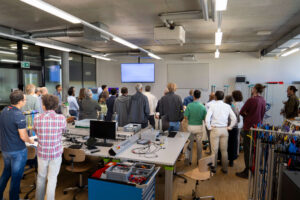
The consortium had the opportunity to attend a demonstration on inertia-less microgrids at the HES-SO Gridlab and visited the Hydro Alps Lab, which focuses on projects in the field of monitoring and improving alpine high-pressure and run-of-river power plants, including condition monitoring, digital clones, and digitalisation.

Public seminar

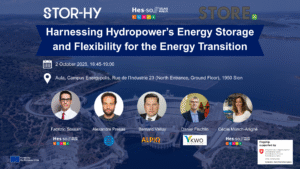
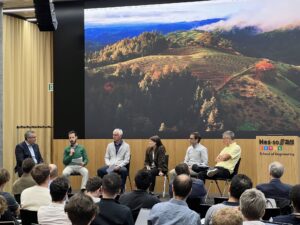
STOR-HY organised a public seminar entitled “Harnessing Hydropower’s Energy Storage and Flexibility for the Energy Transition”, featuring both internal and external speakers. Fabrizio Sossan, who hosted this consortium meeting, introduced the role of energy storage in future power systems. Two representatives of Swiss energy companies were among the speakers. Bernard Valluy from Alpiq discussed the role of hydropower innovation in the European electrical system, and Daniel Fischlin gave a presentation on the transformation of energy companies from energy producers to grid stabilisers.

Alexandre Presas presented the STOR-HY project, and Cécile Münch-Alligné from HES-SO explained how numerical simulations are shaping the future of hydropower, including the challenges of hydraulic short circuits and sediment erosion.

The event concluded with an industrial roundtable with representatives of the project partners: António Aires de Matos (EDP), Jérôme Auguste (EDF), Magdalena Neuhauser (ANDRITZ), Patrick Boissonneau (GE Vernova), and Ricard Subirà (Sener).

Second consortium meeting

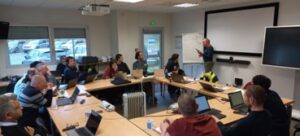
On May 14-15, the STOR-HY partners met online for the second Consortium Meeting and General Assembly.

Day 1: project updates and progress

The first day of the meeting began with an overview session and a presentation of the activities carried out within Work Package (WP) 1: Project Management, delivered by the coordinator, Universitat Politècnica de Catalunya (UPC).

Then, partners presented their advances in WP2: Requirements of Future Pumped Storage Plants; WP3: Modelling and CADS; WP4: Dispatching and Control of PSP; WP5: Saltwater and Harsh Environments; WP6: Demonstrator Activities and Updates; WP7: Sustainability; and WP8: Project Exploitation.

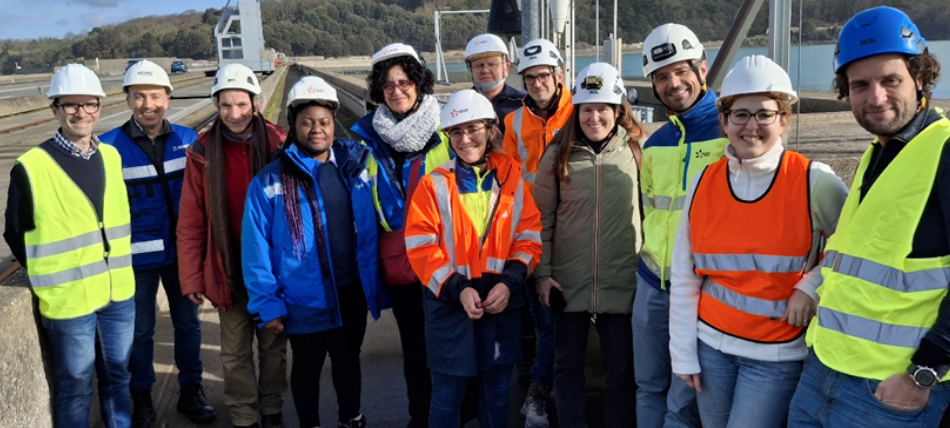
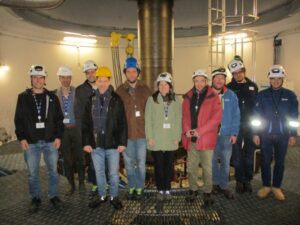
They also presented the demonstrator visits that had taken place in recent months, including those to Le Cheylas and Vouglans-Saut Mortier-Coiselet (VSMC) in January and La Rance in February. The three sites are owned by EDF.

Day 2: project updates and General Assembly

During the first part of the session on Day 2, Zabala Innovation presented their work within WP9: Dissemination and Communication Activities. Partners then discussed important topics relevant to the project and decided on the next steps during the General Assembly.

As the STOR-HY progresses, the first results are beginning to emerge. In line with our mission to reduce the capital and operational costs of innovative pumped storage projects, progress is being made by increasing the durability and recyclability of pumped storage plant components, while minimising costs and environmental impacts and increasing social acceptance. These early achievements reflect the dedication and collaboration of all partners, marking an important step forward towards reducing costs, extending capabilities, enabling predictive maintenance and providing digital tools, and increasing resilience in pumped storage hydropower.

Launch of the STOR-HY project

STOR-HY will improve the lifetime and recyclability of components and develop operational strategies for unconventional schemes.

Funded by the HORIZON programme under Grant Agreement No. 101172905, STOR-HY will run for 48 months from 1 October 2024. The project has received 7.9M€ in funding and involves 18 partners from 8 countries, coordinated by the Universitat Politècnica de Catalunya (UPC).

Brussels, November 2024 — On the 15-16 of October 2024, STOR-HY was officially launched in Brussels, Belgium, to reduce the capital and operating expenditures of innovative pumped storage projects by increasing the lifetime and recyclability of pumped storage plant (PSP) components. It also aims to increase the operational capacity of PSPs by adapting them to unconventional storage schemes and harsh fluids in order to increase their geographical availability.

About the project

Pumped storage hydropower (PSH) is one of the most efficient and flexible large-scale energy storage options available today, with up to 80% full-cycle energy recovery and the ability to balance the grid and expand utilities’ renewable energy portfolios. PSH accounts for around 96% of global utility-scale energy storage. The storage capacity of European hydropower reservoirs exceeds 185 TWh, making them the largest “batteries” available to store energy from other renewables. Europe’s PSH represents 20% of the world’s hydropower capacity.

As a source of bulk power positions, hydropower is a key contributor to grid stability. However, the surge in unpredictable renewable energy sources requires increased regulation to balance intermittent generation, including energy shifting through storage. This intensified demand places a strain on the mechanical components used to regulate power, as they must withstand an increased number of start-stop cycles, ramping duties, and rapid transitions from energy generation to storage.

This can result in increased operating costs, accelerated deterioration, and unexpected damage to critical PSP equipment. To mitigate these issues, there is a crucial need for accurate degradation models and advanced control methods that not only maintain the mechanical integrity of aging hydropower infrastructure, but also actively reduce wear and tear on sensitive components.

STOR-HY seeks to address these challenges by improving the lifetime and recyclability of components and equipment and by defining operating strategies for unconventional schemes through sensor-based, wear and tear monitoring systems to detect early failure mechanisms, postpone unnecessary maintenance actions, avoid unplanned outages, and limit planned outages. Using digital tools for strategic and operational management, it intends to improve the efficiency, reliability, and availability of PSPs, taking into account energy and market demand and dynamics, variable renewable generation, and integration, while mitigating the effects of climate change and improving the flexibility and resilience of the EU energy grid.

STOR-HY also focuses on building regional links with local stakeholders, industry, academia, and policy institutions. Sustainability considerations include economic, environmental, circular economy, and social aspects, drawing on lessons learned from previous projects, including include local impacts, societal acceptance, ecological concerns, and life cycle costs.

To achieve these ambitious goals over the next four years, UPC will work with an international consortium of academic institutions, research centres, and companies from 8 countries: Spain [Universitat Politècnica de Catalunya (UPC), Sener Mobility, Hulleras del Norte (HUNOSA), Fundación Asturiana de Diversificación Minera (FAEN)], France [GE Vernova, Électricité de France (EDF), KAIZEN Solutions, Institut polytechnique de Grenoble (INPG)], Portugal [EDP Produção (EDPP), EDP Centre for New Energy Technologies (EDPN), Instituto de Engenharia de Sistemas e Computadores, Tecnologia e Ciência (INESCTEC)], Switzerland [GE Vernova, Haute école specialisée de Suisse occidentale (HES-SO), ANDRITZ], Germany (vgbe), the Netherlands (Universiteit Twente), Norway [Norwegian Research Centre (NORCE)], and Belgium (Zabala Innovation).

StorHy Logo
Privacy Overview

This website uses cookies so that we can provide you with the best user experience possible. Cookie information is stored in your browser and performs functions such as recognising you when you return to our website and helping our team to understand which sections of the website you find most interesting and useful.