INESC TEC is a private, non-profit research association with public interest status, committed to scientific research and technological development, operating at the intersection of academia, industry, public administration, and society. The research centre connects these sectors by applying its research findings to technology transfer projects, focusing on generating value and delivering societal impact.
INESC TEC comprises 13 R&D centres, including the Centre of Power and Energy Systems, which is involved in the STOR-HY project to bring expertise in power systems, energy storage modelling, and electricity and ancillary service markets, focusing on hybridisation of pumped-storage hydropower plants (PSPs) with photovoltaic (PV) and battery energy storage systems (BESS) and optimisation of market participation.
Contribution to STOR-HY
INESC TEC’s main contributions to STOR-HY unfold in two directions: assessing the flexibility contribution of the various innovative technological solutions in STOR-HY to the power system and optimising the Alqueva triple-hybrid demonstrator in ancillary services markets.
The first of these contributions is framed within the STOR-HY matrix. Building on the flexibility matrix presented in the XFLEX Hydro project (2019-2023), the new matrix provides an updated view of the flexibility dimension in the current European ancillary services landscape, considering new pan-European market mechanisms and requirements for service provision. Through dynamic simulations, INESC TEC is evaluating the demonstrators’ ability to provide various ancillary services while complying with these requirements. Additionally, the new STOR-HY matrix incorporates environmental and societal dimensions developed by the partners at the University of Twente and NORCE, respectively.
The second contribution focuses on optimising the operation of a hybrid hydropower-floating PV-BESS plant in the electricity and frequency regulation markets. INESC TEC is developing a rolling-horizon model predictive control layer that continuously re-optimises setpoints in order to absorb intraday deviations while honouring day-ahead and ancillary service commitments.
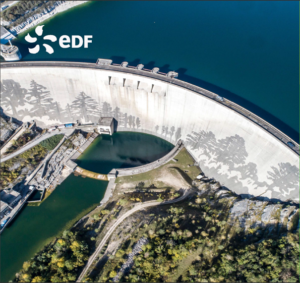
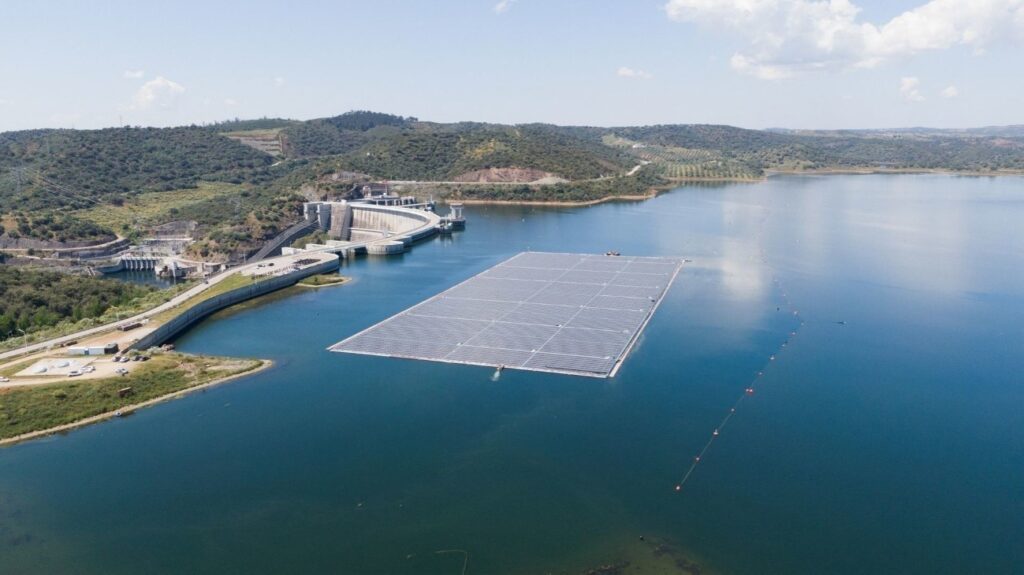
The Alqueva hydropower plant, a 520 MW facility and the first triple hybrid system in the EU, serves as the demonstrator for this framework combining hydropower, photovoltaics, and battery storage, making it an ideal testbed for integrated market-operation strategies.
Coordinating market participation and plant control at Alqueva
At INESC TEC, we are developing operational tools within STOR-HY that connect market decisions with hydropower plant control. Our framework has two decision layers: one for market participation and the other for real-time operations.
- The first layer focuses on the day-ahead market and ancillary services. Optimisation models are used to schedule generation and ancillary service bids for the following day, taking into account respecting reservoir and operational constraints.
- The second layer operates closer to real time. Built on model predictive control, it continuously updates the plant’s operating setpoints as the day unfolds. Because renewable generation can differ from forecasts, the plant often has to adjust its operations during the day while remaining within its market commitments.
Flexibility is only valuable if it can be delivered reliably. By linking market scheduling with real-time control, the framework enables plants such as Alqueva to provide flexibility services while making better use of available water resources.
Challenges and opportunities of hydropower in the EU
Modern hydropower plants do not operate in isolation: they are cornerstones of electricity markets, making up most of the global storage capacity and can rapidly adapt to the ever-changing energy landscape. Thanks to the general time-dispatchability of their power generation, they can offer a wide range of operational flexibility.
Furthermore, traditional fixed-speed hydropower plants and PSPs contribute to the power system inertia by their very nature. However, they have some limitations. For instance, they have a slow response time to frequency variations or power setpoints, and their range for reactive power provision and absorption is limited. Moreover, operating these plants in frequency control can induce behaviours in the machines that accelerate wear and tear on the mechanical components, such as frequent setpoint adjustments or mode changes from pump to turbine. Given the wide variety of ancillary services that a PSP can provide and their respective market frameworks, optimally balancing the operation of the plant across different markets to increase revenues is a complex, multifaceted task.
Conclusion
STOR-HY aims to address the many challenges of PSP in an evolving power system, where renewable and converter-interfaced generation are on the rise. Hydropower has the capacity and responsibility to respond to these new challenges and the potential to contribute more to power system stability and generate new sources of revenue. These factors drive research and technological innovation projects such as STOR-HY.
Taking these steps is paramount in moving towards power systems that rely less on fossil fuels and more on renewable energy. This has long been a priority for the European Union and is a pillar of INESC TEC’s commitment to society.