
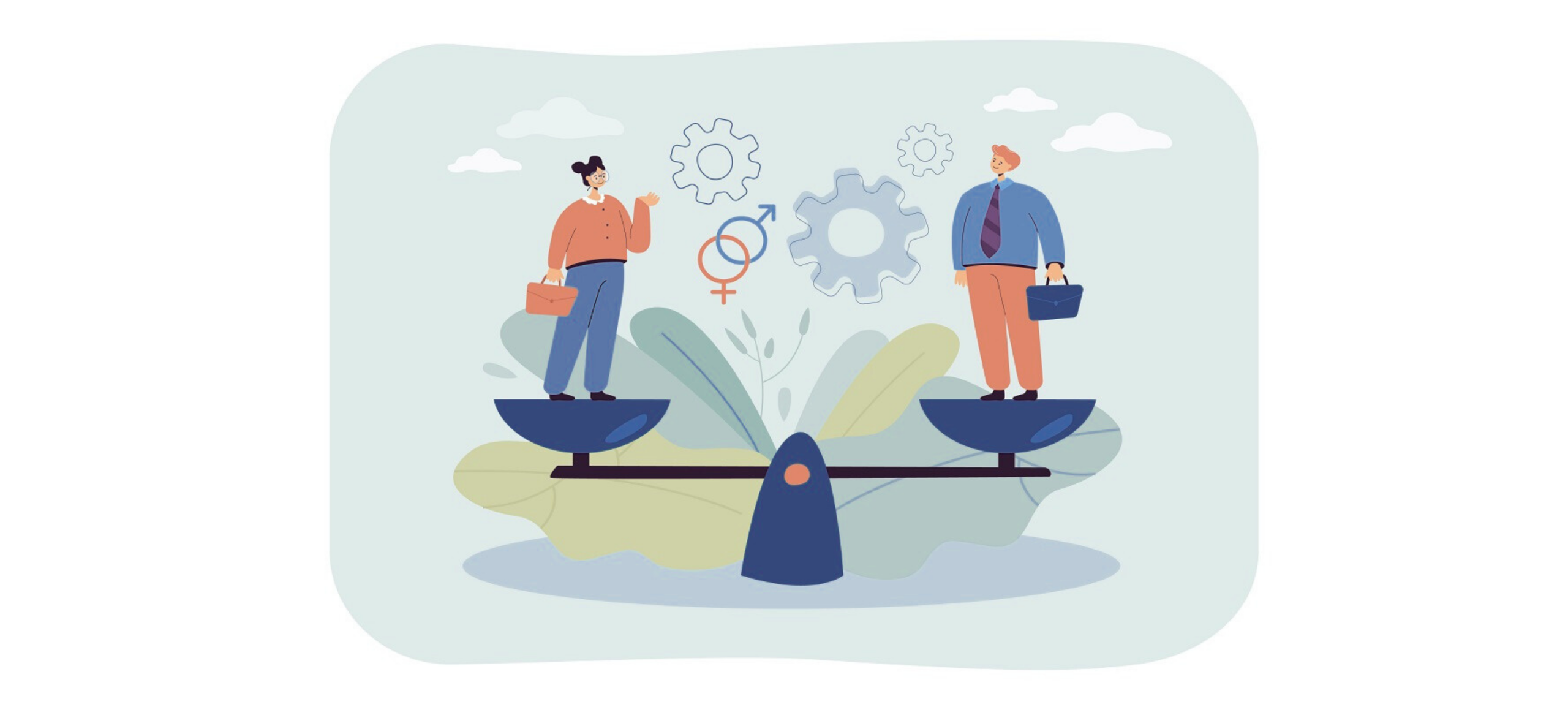
Barriers restricting women’s participation, career progression, and long-term retention
Recognising the specific challenges that women face in the renewable energy sector is a necessary step towards creating effective solutions and enabling them to contribute fully to the energy transition.
These challenges are closely interconnected, but they can be grouped into three main categories:
- Workplace barriers, such as biased recruitment practices and working conditions.
- Societal constraints, including cultural and social norms and discriminatory laws and policies.
- Barriers relating to skills, education, and professional development.
Workplace barriers
Societal constraints
Academic barriers
Measures to address the barriers
The following measures, based on international evidence and sector-specific research, offer concrete pathways for improving women’s participation, retention, and advancement.
Measures to address workplace barriers
Organisations can establish gender-equality objectives at the highest decision-making levels to ensure leadership accountability, embedding gender considerations into business strategy. This includes adopting diversity and inclusion policies, conducting regular gender audits, and integrating equality goals into managers’ performance evaluations.
Recruitment processes should be transparent, competency-based, and free from gendered language. Employers can widen candidate pools by looking beyond traditional engineering profiles and engaging with women’s networks in the energy sector. Clear promotion criteria and regular pay equity reviews help to address persistent pay gaps and ensure equal remuneration for equal work.
Offering flexible working options, such as remote working, flexible schedules, job sharing, parental leave for all genders, and childcare support, reduces the burden of balancing work and care responsibilities. These measures are essential for improving retention rates and enabling women to advance in their careers without facing penalties for family duties.
Hydropower facilities often require work in remote locations. Companies can make these environments safer and more accessible to women by providing adequate facilities, properly fitted safety equipment, secure accommodation, and safe reporting mechanisms for harassment or misconduct.
Mentorship programmes, women’s resource groups, sponsorship initiatives, and leadership training are effective tools for advancing women into decision-making roles. Guidance from experienced professionals can help women to navigate career barriers, expand their networks, and build their confidence.
Measures to address societal constraints
Sector-wide visibility campaigns can highlight the contributions of women in hydropower and reposition the industry as a viable and attractive career path. This could involve showcasing diverse female role models, sharing stories from the field, and challenging stereotypes that depict hydropower as a “male-oriented” or physically unsuitable profession.
Since men continue to occupy most leadership roles in hydropower, it is essential to involve them in gender equality initiatives. Training on unconscious bias and equitable leadership, combined with encouraging men to act as sponsors and vocal supporters of gender equality, can help to remove societal constraints.
Measures to address academic barriers
Exposure to science and engineering should begin in primary and secondary education. Outreach programmes, school partnerships, STEM clubs, and campaigns that counter gender stereotypes can help to spark early interest in technical subjects and normalise girls’ participation in STEM.
Scholarships, internships, and apprenticeships designed for women can increase their representation in hydropower-related disciplines. Gender-responsive teaching practices, inclusive classroom environments, and the presence of female faculty members also encourage women to join STEM programmes.
Programmes that bridge the gap between universities and the energy sector, such as joint industry–academia training initiatives, career fairs, site visits, and graduate programmes, help female students gain practical experience and better understanding of career opportunities in hydropower.
Ensuring gender-balanced panels, inviting female experts as keynote speakers, and promoting women’s research contributions can counteract the lack of representation that often discourages women from participating in academic and professional communities.
Gender equality in STOR-HY
- To strengthen the gender dimension in research and technological solutions
- To address gender imbalances in decision-making and leadership
- To enhance the visibility of female researchers
- To facilitate gender-sensitive recruitment and career development of female researchers and students
- To foster an inclusive project culture
These objectives will be achieved by implementing and monitoring of specific actions throughout the project’s lifetime. Examples of these actions include analysing the gender dimension of research and technological solutions, supporting women’s participation in industry events, promoting networking opportunities, and creating awareness campaigns.
According to STOR-HY’s initial gender balance assessment, 26% of participants are women, which is slightly above the industry average. In line with these trends, women represent 58% of administrative and communication roles.