EDF is a French multinational energy company, primarily owned by the French state. It operates nuclear, hydro, wind, solar, and thermal power plants. EDF supplies electricity and energy services across Europe and worldwide to millions of customers. EDF participates in the STOR‑HY project through two entities: EDF Hydro and EDF R&D. EDF R&D is the research and innovation division of the EDF Group. It develops advanced technologies supporting low‑carbon electricity generation, nuclear safety, renewable energies, power grids, and digital solutions.
EDF Hydro is a major player in hydropower in France. With an installed capacity exceeding 20 GW, hydropower represents approximately 15% of EDF’s national electricity production. The hydro fleet includes more than 400 power plants and 600 dams, operated by around 5,000 employees. EDF Hydro operates six pumped‑storage power plants (PSPP), representing a total of 5 GW of installed capacity. Each year, EDF Hydro invests over €500 million in maintenance and modernisation, ensuring the long‑term safety, reliability, and performance of its assets.
Within STOR‑HY, EDF specifically addresses key challenges related to hydropower‑based energy storage, carrying out tests and measurements at several power plants in close collaboration with the industrial and academic partners of the consortium.
Vouglans – Saut‑Mortier – Coiselet (VSMC)
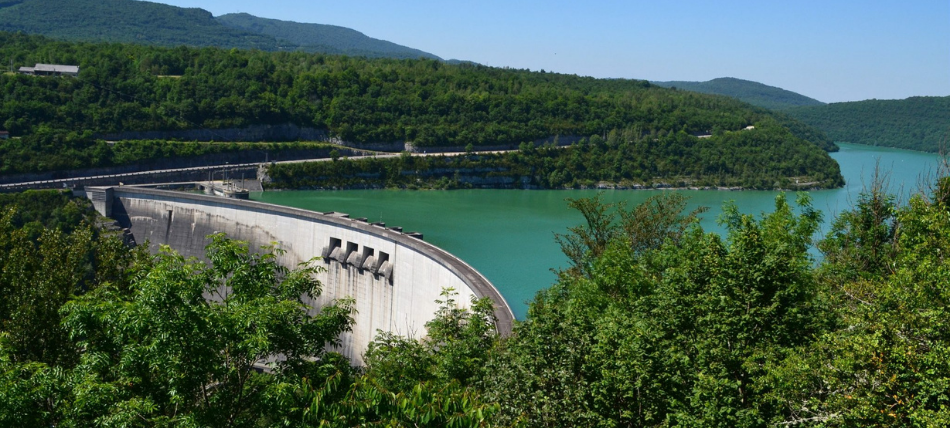
Vouglans, Saut‑Mortier, and Coiselet form a cascade of three dams and associated power plants located in the Jura Mountains, with a combined installed capacity of approximately 370 MW. Ongoing works to add pumping capability at Saut‑Mortier will make this site a representative example of cascaded pumped‑storage operation.
- Challenges: Managing increased mechanical wear due to intensified operation, exploring potential evolutions of the Unit 4 pump start‑up mode at Vouglans, and limiting the environmental impact of flushing operations on biodiversity.
- Research: Studies focused on optimizing cascade operation and improving Unit 4 pump start‑up strategies.
- Testing: Site tests are planned for 2027, including strain‑gauge measurements on Unit 4, supported by hydraulic scale‑model testing and theoretical modeling. This site also contributes to research on low‑head tandem pumping.
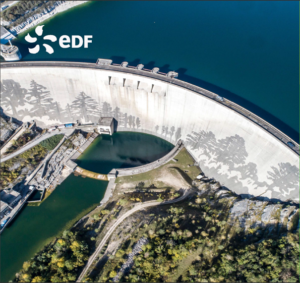
Le Cheylas
Le Cheylas is a pumped‑storage power plant located in the Alps, commissioned in 1980, and equipped with two 230 MW units. The plant operates under a head of approximately 260 m.
- Challenges: Adapting operation to the 15‑minute electricity market (ArchyFlex) to reduce start-stop cycles, and anticipating the impact of sediment transport on machine wear.
- Control systems: The validation of upgraded control commands was completed in 2025, enabling new transitions from turbine mode to synchronous compensator mode.
- Testing: Additional instrumentation was installed in August 2025. A dedicated test campaign is planned for September 2026 to evaluate solutions aimed at enhancing the flexibility and extending the lifetime of this 45‑year‑old PSPP.
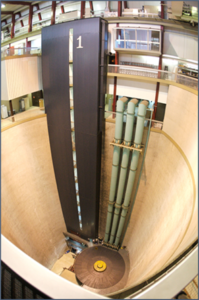
La Rance
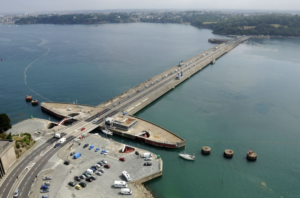
La Rance is a unique tidal power station, commissioned in 1966, and remains a global reference in marine renewable energy. It is equipped with 24 reversible generating units, each rated at 10 MW, for a total installed capacity of 240 MW.
- Focus: Saltwater tidal pumped‑storage‑like operation.
- Challenges: Mitigating biofouling effects and assessing the integration of a battery system to better align tidal‑constrained operation with market requirements.
- Testing: Biofouling tests are ongoing, with test coupons installed in May 2024. Cleaning trials were conducted in November 2025, evaluating techniques such as sponge cleaning, cavitation jets, and underwater brushing.
Conclusion
EDF’s active involvement in the STOR‑HY project demonstrates its strong commitment to advancing innovative and sustainable energy storage solutions. By leveraging its extensive hydropower expertise, conducting large‑scale experimental campaigns on real facilities, and closely collaborating with industrial and academic partners, EDF plays a key role in bridging research and operational deployment. These efforts reinforce EDF’s position as a major driver of the energy transition, supporting more resilient, flexible, and low‑carbon power systems for the future.