vgbe’s perspective within STOR-HY
vgbe energy e.V. (vgbe) is a technical association of energy plant operators. Our members are companies worldwide that operate power, heat and cooling, energy storage, and sector-coupling plants. Currently, vgbe energy has 411 members, comprising operators, manufacturers, and institutions connected with energy engineering. The members come from 29 countries and represent an installed power generation capacity of 292,000 MW. vgbe serves as a collective platform for the hydropower community, committing to the goal of developing the economy and society in a climate-neutral and sustainable way. Hence, it contributes to demonstrating and actively shaping the technical options required for environmentally-friendly, safe, and economical energy supply.
In its mission as an independent technical competence centre and network, vgbe supports its international members in their respective business activities and in the implementation of innovation solutions and strategic tasks. Cooperation with all partners along the energy value chain, especially with manufacturers and service providers, is an essential criterion of becoming the voice of plant operators. Moreover, vgbe actively and factually contributes to debate on technical issues, which makes it the international and central contact for all technical issues relating to the operation of energy plants.
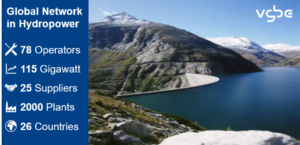
The Technical Competence Center Hydro Power, as part of vgbe, focuses on operation and maintenance from a techno-economic and ecological perspective, as well as on application-oriented research for the hydropower community. To achieve this, we pursue key activities such as sharing knowledge and experience, developing technical and operational standards in the form of best-practice guidelines, and coordinating or participating in national and international research projects. Current focal points include technical and cost benchmarking, guidelines for risk-based maintenance based on damage events, a catalogue of 100 use cases featuring implemented digital solutions and measures, and much more. Further information is available here.
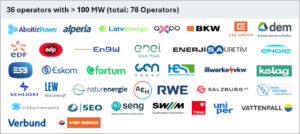
Using its strengths in cooperation and networking, vgbe specifically focuses on the exploitation and market uptake of project results within STOR-HY and contributes its European hydropower network to communication and dissemination activities.
Contribution to STOR-HY
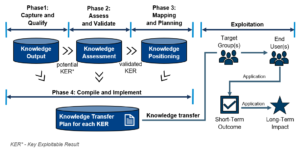
In the STOR-HY project, vgbe will develop the Exploitation Master Plan and coordinate the identification, validation, and strategic positioning of the project’s Key Exploitable Results. This includes assessing their market viability, scalability, feasibility, risks, and potential barriers, as well as supporting the development of business plans for feasible solutions. In addition, vgbe will lead the preparation of a sector-wide marketing strategy and a techno-regulatory roadmap to support industrial deployment and alignment with relevant EU policies.
Overall, vgbe’s contribution is to help bridge research outcomes and practical implementation by providing exploitation guidance, stakeholder insights, and recommendations for researchers, policymakers, and investors.
Moreover, vgbe leads the work on interaction with the International Advisory Board contributing to valuable insights and advice on the project’s strategic direction and key technical, business, and market matters.
Challenges and opportunities for hydropower in Europe
Although Europe’s hydropower fleet is mature and well-established, one major technical challenge for hydropower in Europe is that many existing plants are ageing and need modernisation. Older turbines, generators, transformers and control systems often require refurbishment or replacement to remain efficient and reliable. By modernising these components, hydropower plants can improve their performance and safety.
Another important challenge is the need for more flexible operation because Europe is using more wind and solar power. Hydropower plants increasingly have to start and stop more often, ramp up and down faster, and operate at part load. This increases mechanical stress and the risk of hydraulic issues such as pressure fluctuations and water hammer.
At the same time, digitalisation is becoming more important for the hydropower sector. Operators need better inflow forecasts, predictive maintenance systems, digital twins and cyber-secure control systems to manage plants more effectively. Overall, European hydropower must become more modern, flexible, and data-driven while still maintaining high reliability and safety.
Conclusion
Large scale research projects like STOR-HY bring forward the hydropower ecosystem, where an interdisciplinary, cross-border expertise is needed to holistically reach a balance between electricity generation and grid services, and following it impacts on ecosystems and society. vgbe’s active involvement in the STOR-HY project makes an important contribution to the exploitation and market uptake of innovative hydropower solutions. Through its European hydropower network, vgbe also supports effective communication and dissemination, thereby helping to transfer project results into practical applications. This is exactly where vgbe sees its competence in sustaining the project results while maintaining the objectives of renewable energy and related to it standards and policies.