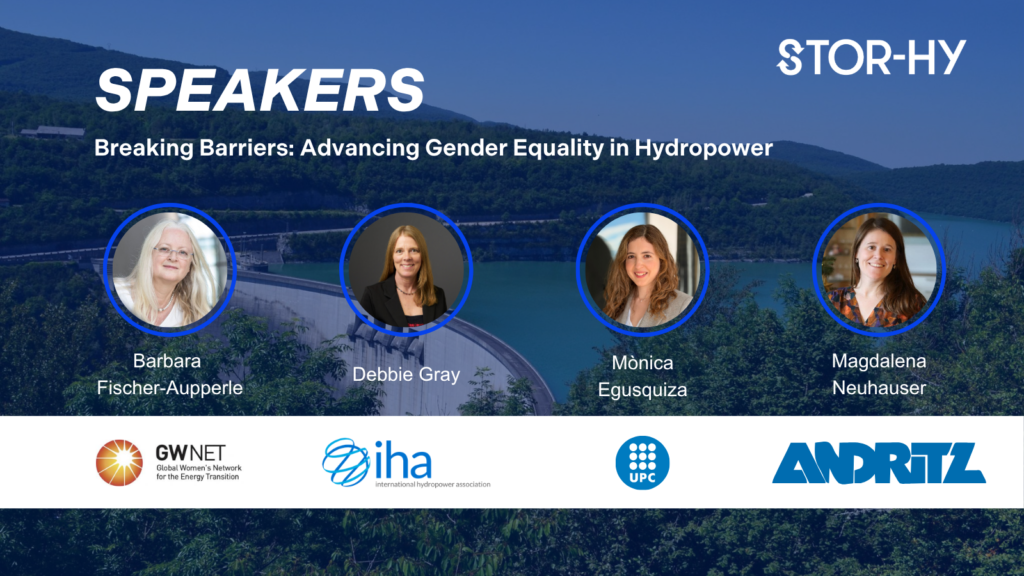
On 30 September 2026, STOR-HY organised the online workshop “Breaking Barriers: Advancing Gender Equality in Hydropower”, bringing together experts from international organisations, academia and industry to discuss the barriers affecting women’s participation, career progression and long-term retention in the hydropower sector.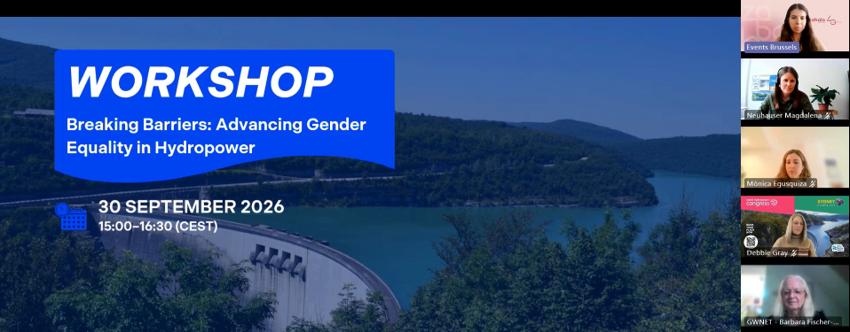
Organised as part of the project’s Gender Action Plan, the workshop aimed to raise awareness of gender inequalities in hydropower and encourage dialogue on how organisations can address them. Through presentations and interactive discussions, participants shared experiences, identified good practices and developed recommendations to foster a more diverse and inclusive industry.
Perspectives on gender equality in hydropower
The workshop opened with a presentation by Barbara Fischer-Aupperle, founding member of the Global Women’s Network for the Energy Transition (GWNET), and Debbie Gray, Senior Energy Policy Manager at the International Hydropower Association (IHA). Both are also mentors and members of the Steering Committee of the Women in Hydropower mentorship programme.
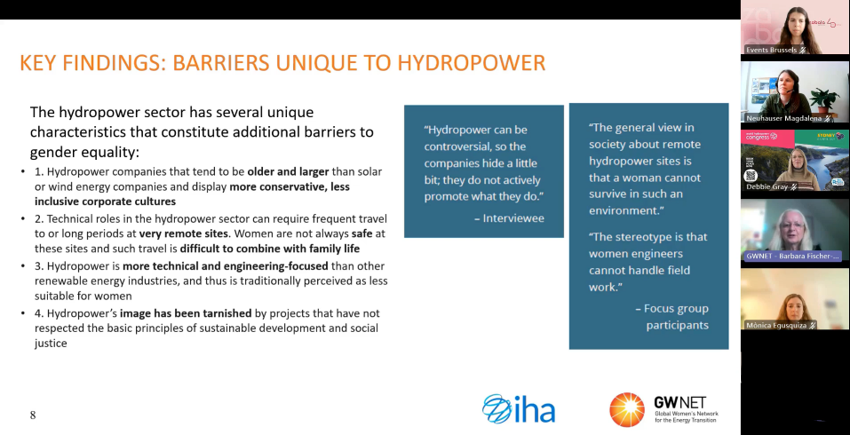
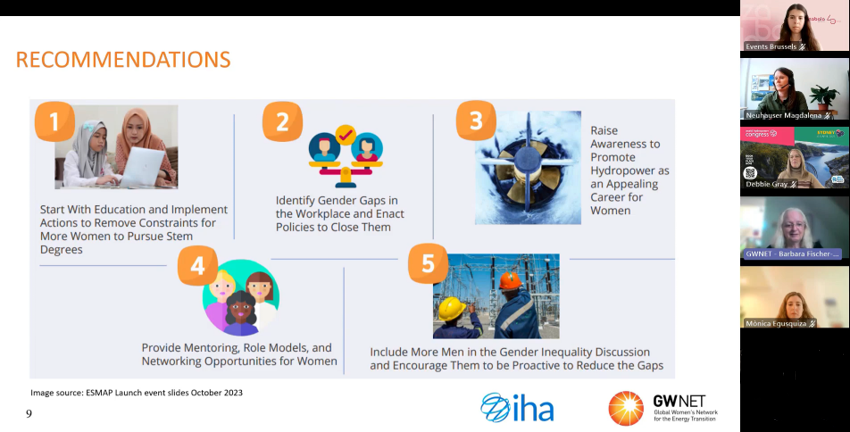
Drawing on the ESMAP/World Bank report Getting to Gender Equality in the Hydropower Sector, they examined women’s representation in the industry, the challenges affecting their participation and advancement, and recommendations for promoting greater equality. Their presentation also highlighted the role of mentorship initiatives in supporting women’s professional development.
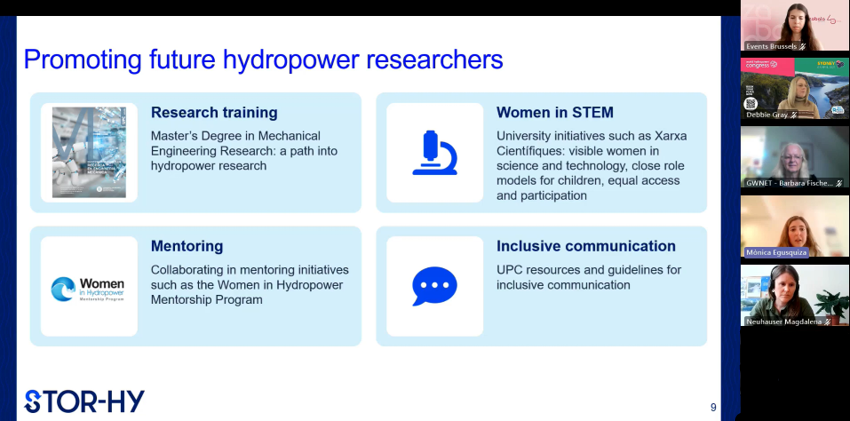
The discussion then moved to the experiences of women working in technical and research roles in hydropower. Dr Mònica Egusquiza, Assistant Professor at the Universitat Politècnica de Catalunya (UPC) and researcher at CDIF-UPC, presented Building a Career in Hydropower Research: Reflections on Inclusion in Academia. She shared her experience in hydropower research, reflecting on career development and inclusion within academic and technical environments.
Dr Magdalena Neuhauser, Head of the Hydraulic Laboratory at ANDRITZ Hydro in Vevey, Switzerland, delivered a presentation titled Inclusion in Hydropower: My Journey at ANDRITZ, Challenges, Opportunities, and Lessons Learned. Drawing on her professional experience in hydropower research and development, she explored the challenges and opportunities associated with building a career in the industry.
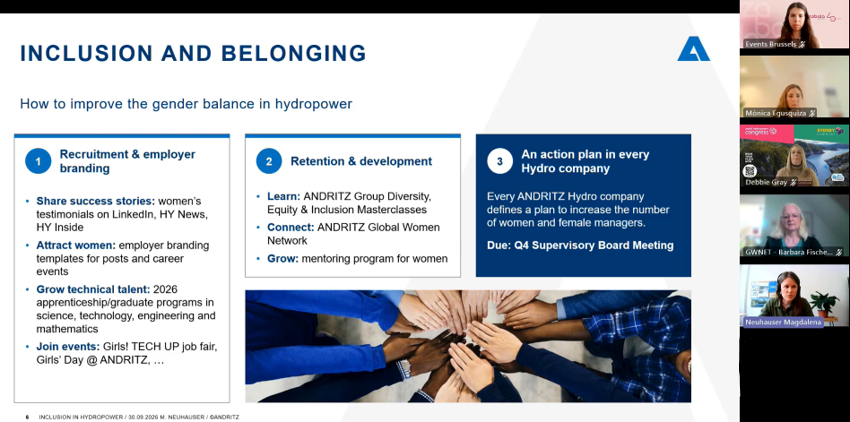
The presentations were followed by a Q&A session, allowing participants to engage directly with the speakers and explore the issues raised in greater depth.
Identifying the barriers
A central component of the workshop was the breakout discussions, during which participants shared their experiences and identified the main barriers to achieving gender equality in hydropower.
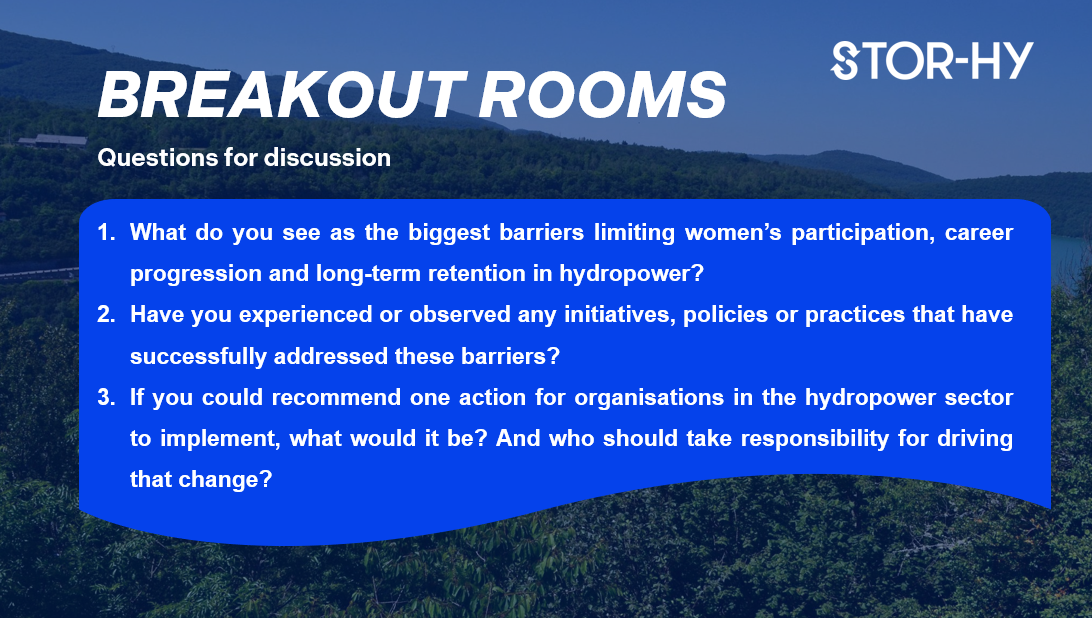
Several recurring themes emerged. Gender bias and workplace stereotypes were identified as significant barriers. Participants highlighted how women’s technical expertise may be questioned or undervalued, requiring them to repeatedly demonstrate their competence. Traditional assumptions about gender roles can also lead to women being associated with administrative or support functions rather than technical and leadership positions.
These challenges are closely linked to career progression barriers. Participants observed that women may experience slower advancement and encounter restrictions based on assumptions about the academic or technical backgrounds required for particular roles. For example, the perception that project management positions should be reserved for professionals with engineering or other “hard science” qualifications can limit opportunities for individuals from environmental and other disciplines.
Another recurring concern was the underrepresentation of women in STEM and hydropower, compounded by a lack of visible female role models. Limited representation can make it more difficult for girls and young women to envision a career in the sector and understand the opportunities available.
Work-life balance and caring responsibilities were also discussed. Maternity leave, family-related career interruptions and unequal distribution of caring responsibilities can affect women’s retention and professional advancement, particularly in contexts where family-friendly policies and paternity leave are limited.
Finally, participants highlighted working conditions and infrastructure, including the lack of appropriate facilities at some field sites and safety concerns associated with working alone. They also emphasised that these challenges vary considerably across countries and regions, reflecting different cultural attitudes and workplace practices.
From good practices to concrete recommendations
Beyond identifying barriers, the workshop encouraged participants to share initiatives that have successfully supported women in hydropower and propose actions that organisations could implement.
Mentorship, networking and professional development
Mentorship programmes and professional networks were identified as valuable mechanisms for supporting women’s career development, providing guidance, building confidence and facilitating professional connections. Examples include the Global Women’s Network for the Energy Transition (GWNET) and Women in Hydropower mentorship programmes and resources provided by the Women in Sustainable Hydropower (WISH) network.
Participants also stressed that these initiatives should complement organisational measures to remove structural barriers rather than placing responsibility for overcoming inequality solely on women.
Greater visibility of female role models
Increasing the visibility of women working in hydropower was another important recommendation. Sharing professional success stories, highlighting women’s contributions to technical projects and ensuring their representation at conferences and industry events can help challenge stereotypes and demonstrate the diversity of career opportunities available.
Participants encouraged companies to actively support women’s participation in external events and outreach activities, including by allocating sufficient working time for these commitments.
Education and early engagement
Engaging girls and young women before they enter the workforce was considered essential to increasing female representation in hydropower.
Participants proposed strengthening collaboration between hydropower companies, schools and universities, enabling female professionals to share their experiences and introduce students to the sector.
Such activities can help challenge traditional perceptions of engineering and demonstrate the range of professional opportunities available in hydropower.
Flexible working and family-friendly policies
Flexible working arrangements, including remote working, were highlighted as beneficial for work-life balance and employee retention.
Participants recommended that organisations incorporate flexibility into employment policies, communicate available arrangements clearly during recruitment and consider additional support measures, such as childcare services and family-friendly policies.
Inclusive workplace cultures and organisational commitment
Participants emphasised that lasting progress requires commitment from organisational leadership.
Companies were encouraged to review career progression requirements, recognise diverse academic and professional backgrounds, and address everyday behaviours and assumptions that undermine women’s expertise.
The importance of involving men in gender equality initiatives was also highlighted, recognising that creating inclusive workplaces requires the participation of the entire workforce.
To translate commitments into measurable progress, participants suggested establishing clear objectives and incentives to promote accountability and monitor improvements over time.
Turning dialogue into action
The breakout discussions concluded with a plenary session in which representatives from each group presented their main findings, including the most significant barriers, examples of good practices and recommendations for future action.
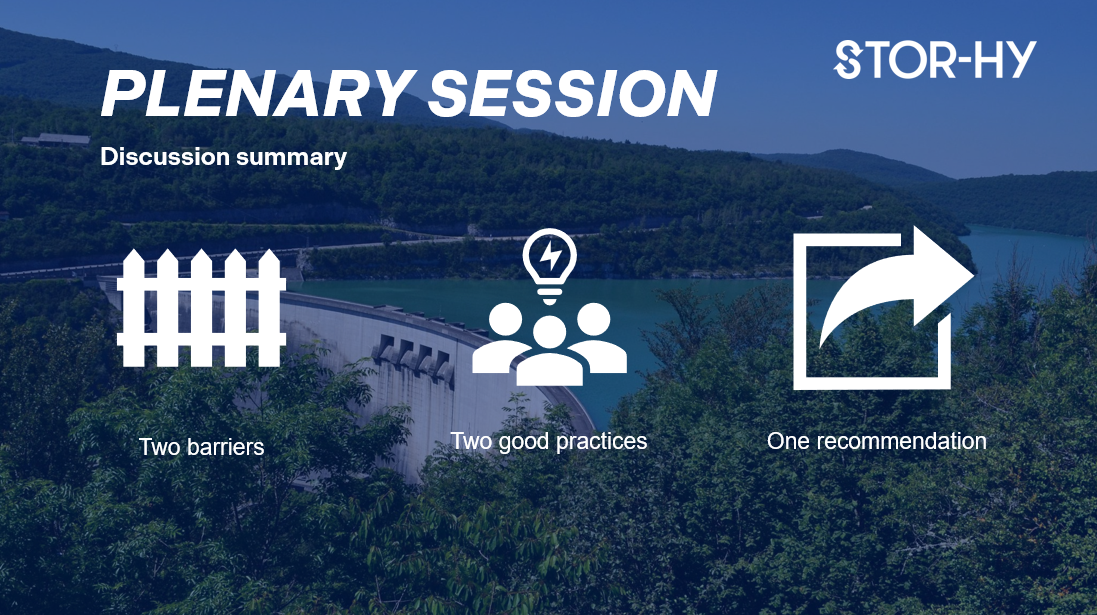
The exchange demonstrated that advancing gender equality in hydropower requires a combination of individual support, organisational change and sector-wide cooperation.
While mentorship and professional networks can help women develop their careers, broader measures are needed to challenge stereotypes, remove restrictions on career progression, improve working conditions and ensure equal opportunities.
Workshop recording
For those who were unable to attend or would like to revisit the discussions, the workshop recording is available on the YouTube channel.
We would like to thank Barbara Fischer-Aupperle, Debbie Gray, Mònica Egusquiza and Magdalena Neuhauser, as well as all participants, for sharing their experiences and perspectives.