The first scientific article from the STOR-HY project has been published by project coordinator Alexandre Presas and his PhD student Xia Xiang from the Centre for Industrial Diagnosis and Fluid Dynamics at the Polytechnic University of Catalonia. Titled “Resonance observation of pump-turbine runners from the stationary frame: analytical-numerical model for the natural mode splitting of submerged rotating disc-blades-disc structures”, it was published in Mechanical Systems and Signal Processing, one of the leading journals in the field of mechanical engineering.
Addressing a Long-Standing Challenge
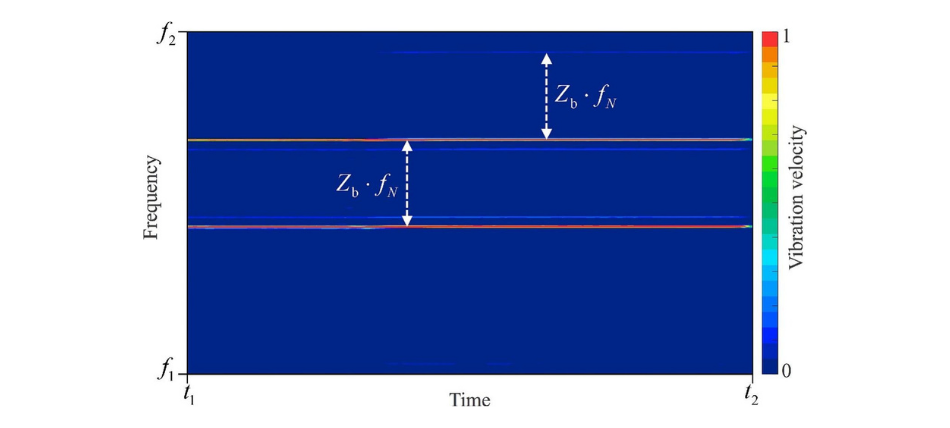
The article explores what happens when a pump-turbine enters a resonant state. Although this condition can pose serious risks to equipment and grid stability, it often goes undetected. This is due to the highly damped environment of submerged structures masking the resonance and to the complex manner in which vibrational energy splits into multiple sidebands. These modulation patterns are particularly challenging to analyse and monitor using conventional techniques.
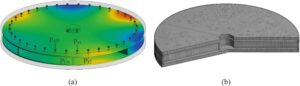
This phenomenon has been observed in real hydropower plants, including the Grimsel pumped storage plant. However, until now, there has been no comprehensive analytical explanation for it. This publication addresses this by combining theoretical insight with advanced numerical simulations based on a coupled CFD–FEM model. In doing so, it sheds light on a subject that has challenged the hydropower community for decades.
From Academic Insight to Practical Application
The paper addresses a question that Presas has wanted to explore since completing his own PhD: the impact of runner rotation on modal splitting in pump-turbine components. The study draws on previously unpublished data from prototype testing and blade-disk experiments to validate the theory.
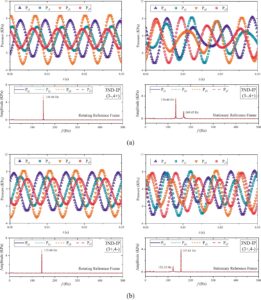
By shedding light on how these complex modulation patterns develop, the findings have direct implications for the safety, reliability, and predictive maintenance of pumped storage systems. In particular, the research helps to define new strategies for condition monitoring, which is of central importance to STOR-HY’s objectives.
Integration into the STOR-HY Monitoring Platform
The insights from this research will be incorporated into the Cyber-physical platform for Advanced Decision Support (CADS) developed as part of the STOR-HY project. The CADS aims to provide real-time monitoring and predictive diagnostics for critical components in pumped storage hydropower plants. The resonance models presented in this paper will improve the early detection of fatigue, structural instability and failure risk in critical machinery.
A Step Forward for Smarter Hydropower
As Europe modernises its hydropower fleet to meet the challenges of the energy transition and climate resilience, a better understanding of dynamic machine behaviour is essential. With over 40% of global hydropower assets being more than four decades old, the need for advanced monitoring and lifetime prediction tools is growing.
STOR-HY’s research plays a vital role in this endeavour by contributing to the development of digital solutions that will ensure the continued viability of hydropower. This article exemplifies the project’s commitment to combining scientific knowledge with applied innovation to ensure that the next generation of hydropower plants is safer, more efficient, and more resilient.